



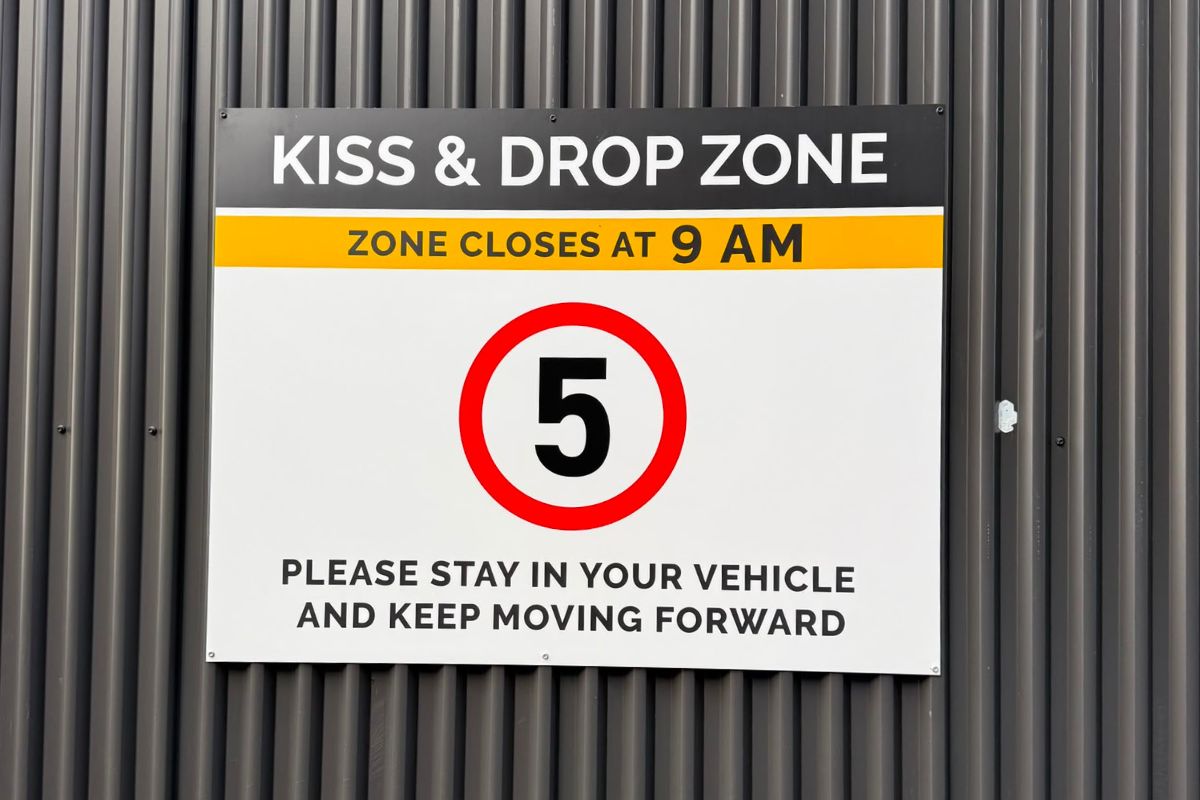
School traffic signs: A guide to safer school grounds
School drop-off can get chaotic fast.
Cars are pulling in and out, students are crossing between vehicles, buses are arriving, staff are trying to park and visitors may be looking for the office at the same time. Add a delivery driver who has gone through the wrong gate and things can get confusing pretty quickly.
Good school traffic signs help bring some order to all of that. From Kiss and Go zones and staff parking to speed limits, pedestrian crossings and wayfinding, the right signage makes it easier for everyone to understand where they should go and what they should do.
At School Signs, we’ve been helping schools across Australia do exactly that for more than 25 years. As a one-stop shop for school signage, we take care of the lot, from design and production through to installation. We’re here to help your school stand out and make sure everyone on site is seen and safe.
Need a hand with your school traffic signage? Book a free school site visit and receive tailored recommendations.
Why school traffic signs matter
Traffic signage around a school does more than tell drivers where to park.
It helps create a safer, more predictable environment for students, staff, parents, visitors and anyone else moving through the grounds.
Clear school traffic signs can help:
- improve safety for pedestrians and drivers
- reduce congestion around busy entrances and exits
- make parking rules easier to understand
- keep drop-off and pick-up areas moving
- direct visitors, delivery drivers and emergency services to the right place
- separate buses, cars and pedestrian areas where needed
This becomes especially important during the morning and afternoon rush, when a lot of people are trying to move through a relatively small space at once.
If signage is faded, unclear, inconsistent or easy to miss, people start making their own decisions. That is usually when confusion and chaos creep in.
Essential traffic signs for schools
Every school site is different, so there is no single signage setup that works everywhere.
A small primary school may only need a handful of clearly marked parking and drop-off zones, while a large school campus could require multiple entry points, visitor parking, staff parking, delivery zones and internal wayfinding.
There are, however, a few types of school traffic signs that tend to do most of the work, which we’ll cover next.
Kiss and Go signs
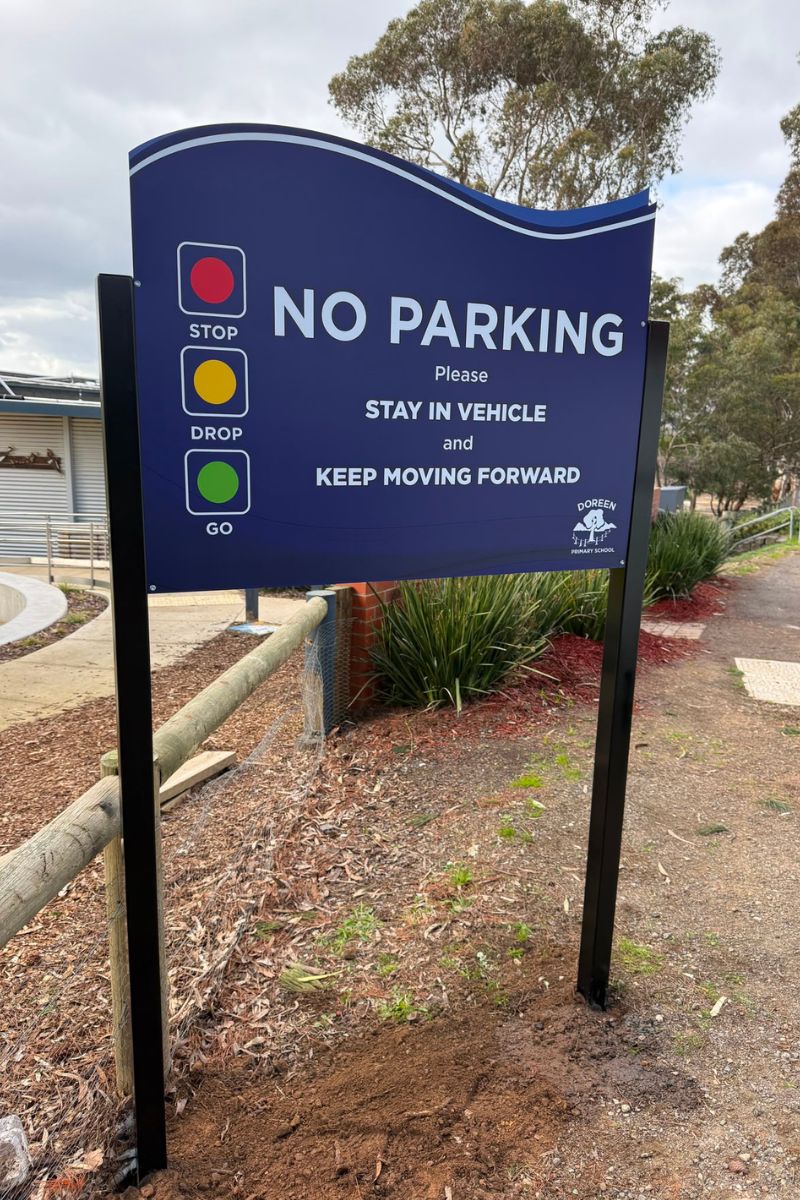
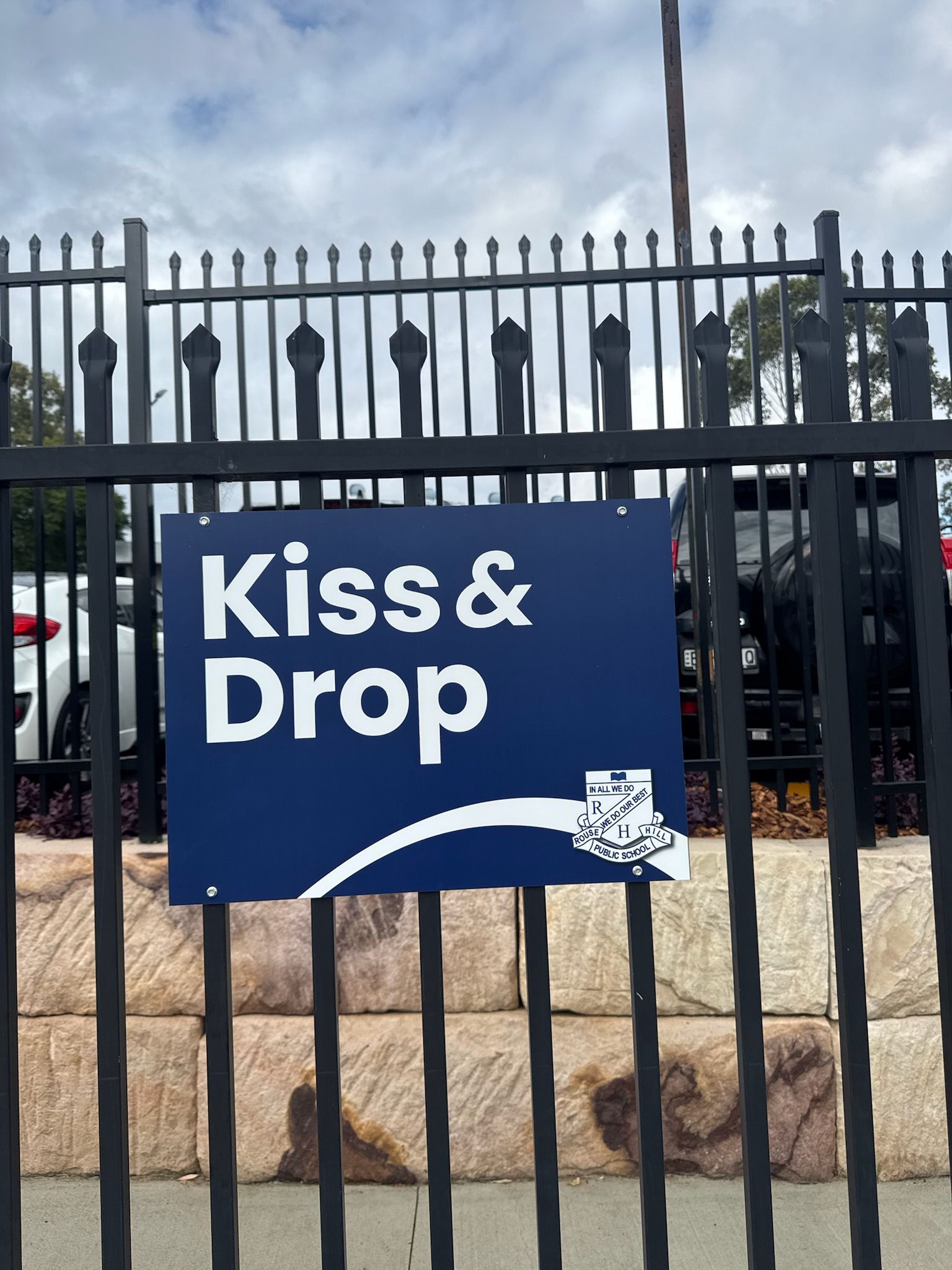
Starting with Kiss and Go signs, which are designed to keep drop-off and pick-up moving. That only works if drivers know exactly how the area is meant to be used.
Clear signage can identify:
- designated drop-off and pick-up areas
- time limits (e.g. 2 minutes)
- no parking zones
- entry and exit points
- one-way traffic flow
- where drivers should queue
The simpler the instructions are, the better. Parents are often reading these signs while watching traffic, looking for children and trying to keep the car moving, so this is not the place for a paragraph of instructions in tiny text.
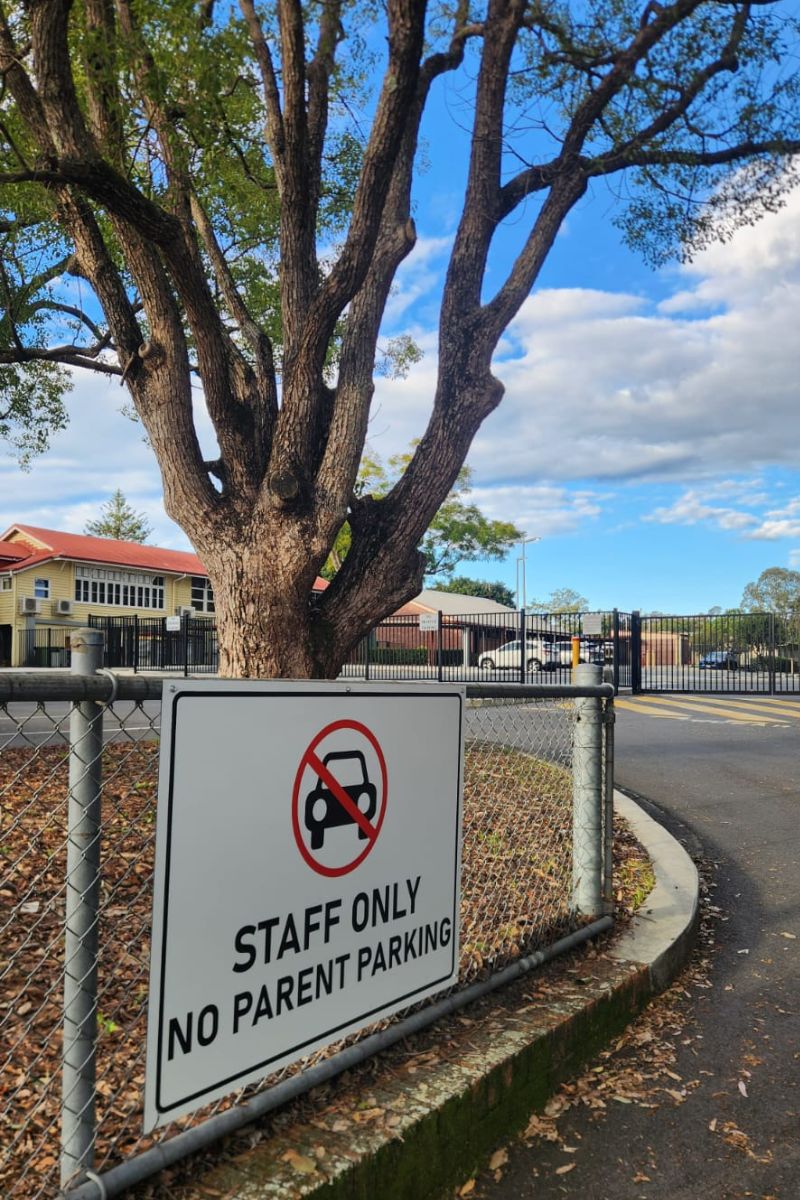
School parking signs
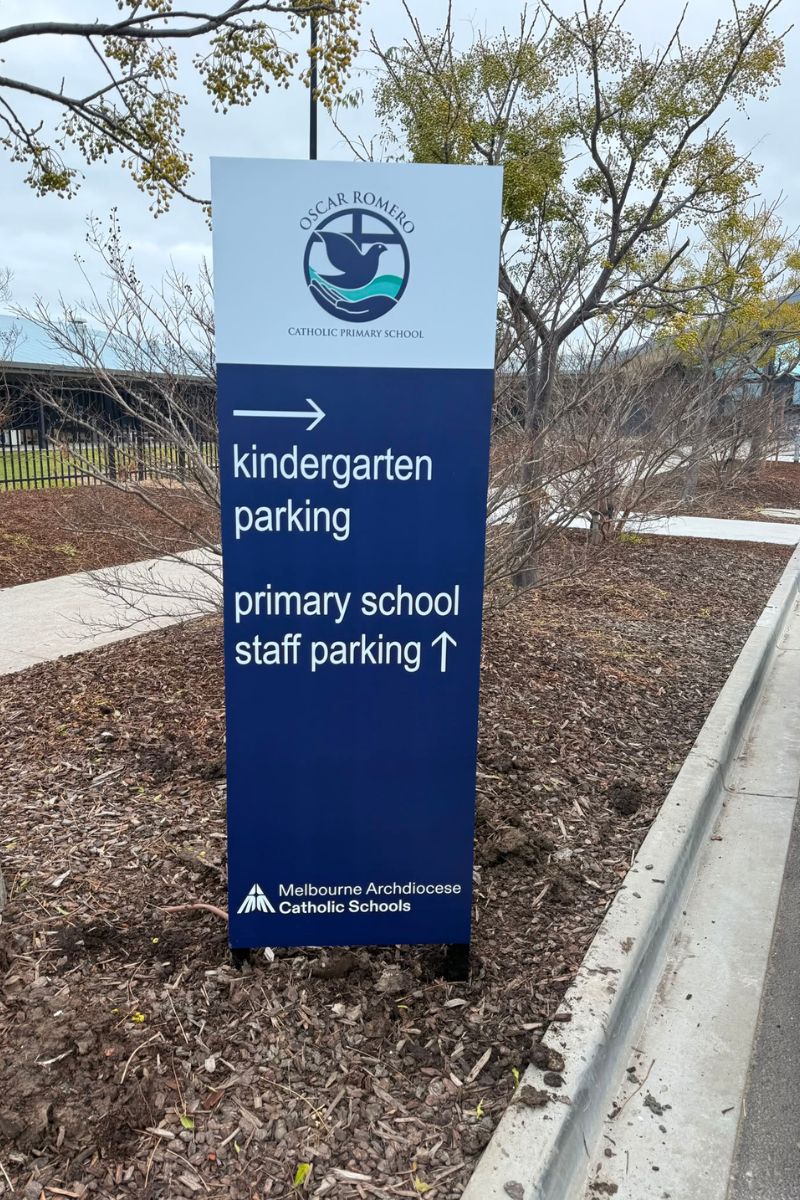
Car park signage helps separate different users across the school. That might include dedicated spaces for staff, visitors, accessible parking, loading and deliveries etc.
It can also clearly mark areas where parking or standing is restricted.
Consistent parking signs are particularly useful on larger school grounds where several car parks or access points may look similar. A visitor should not have to drive around the school twice before working out where they are allowed to leave the car.
Speed and traffic control signs
Schools naturally have a high level of pedestrian activity, so controlling vehicle movement is critical to keeping everyone seen and safe.
Signs may be used to communicate:
- internal speed limits
- stop or give way points
- one-way traffic
- no entry areas
- vehicle entry and exit points
- restricted access zones
These signs need to be highly visible and placed where drivers have enough time to see and respond to them.
It is also worth looking at the traffic flow as a whole rather than treating every sign as an isolated piece. A speed sign, directional arrow and entry sign should all work together to make the route obvious.
Pedestrian and crossing signs
Students can move unpredictably, particularly at the start and end of the school day. Clear pedestrian and safety signage helps alert drivers to areas where foot traffic is likely to be higher.
This can include signs around:
- pedestrian crossings
- pathways
- student pick-up areas
- car park crossings
- shared vehicle and pedestrian zones
Signs can also reinforce where students are expected to cross rather than leaving them to find the shortest route between parked cars.
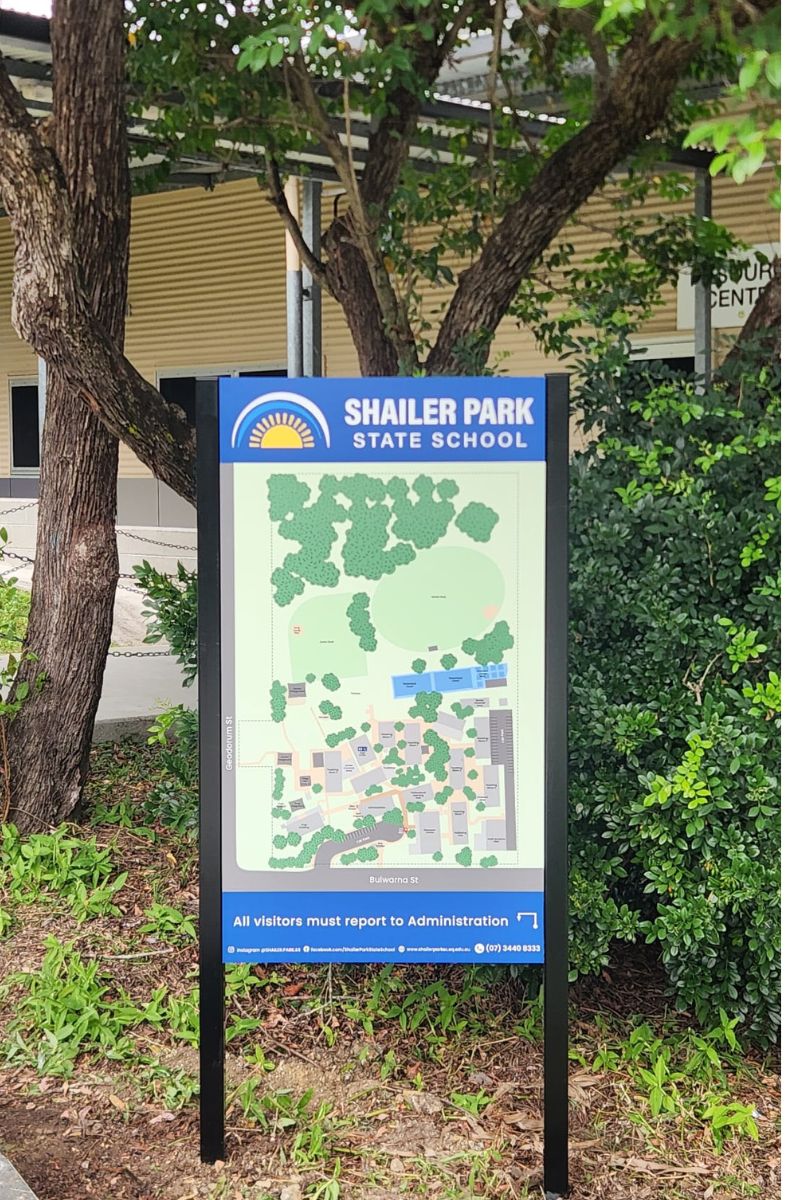
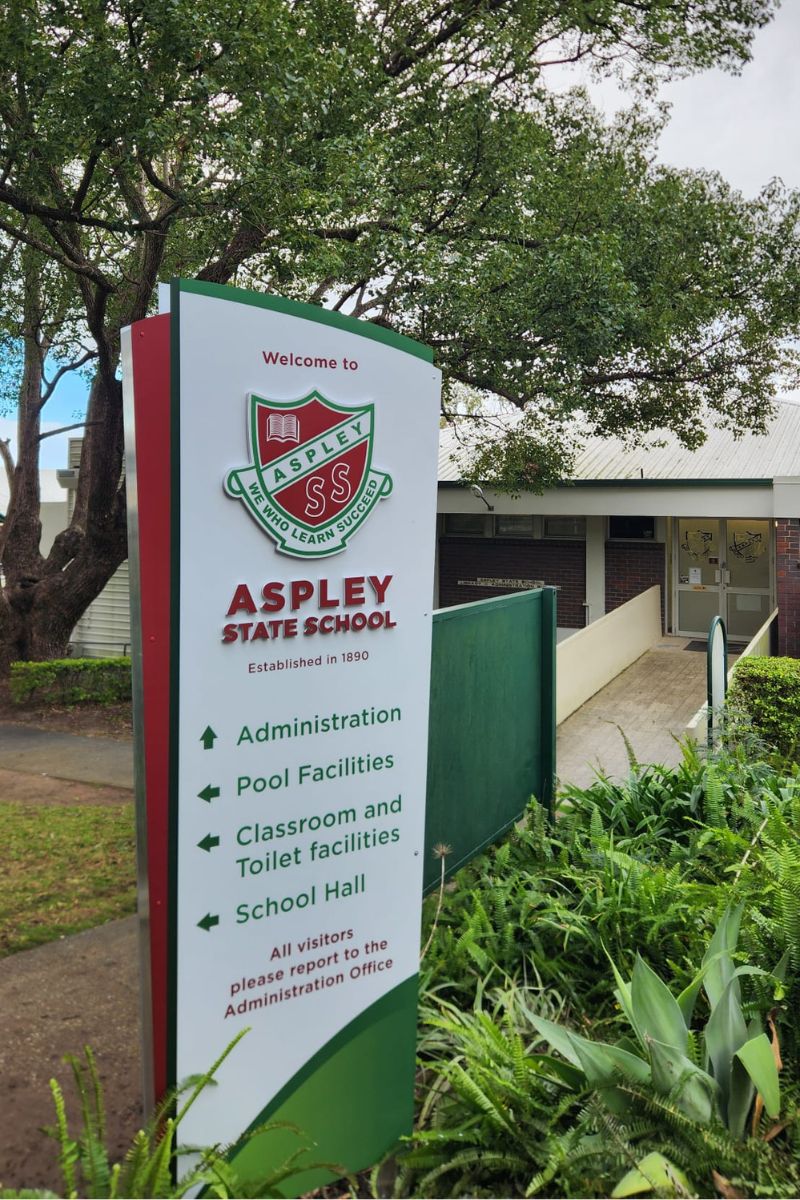
Wayfinding and directional signs
Not everyone arriving at a school knows where they are going. Parents attending an appointment, contractors, new staff, delivery drivers and emergency services may all be unfamiliar with the site.
That makes wayfinding a very important part of school traffic signage.
Directional signs can point people towards:
- administration
- visitor parking
- staff parking
- exits
- sporting facilities
- loading zones
- specific buildings or blocks
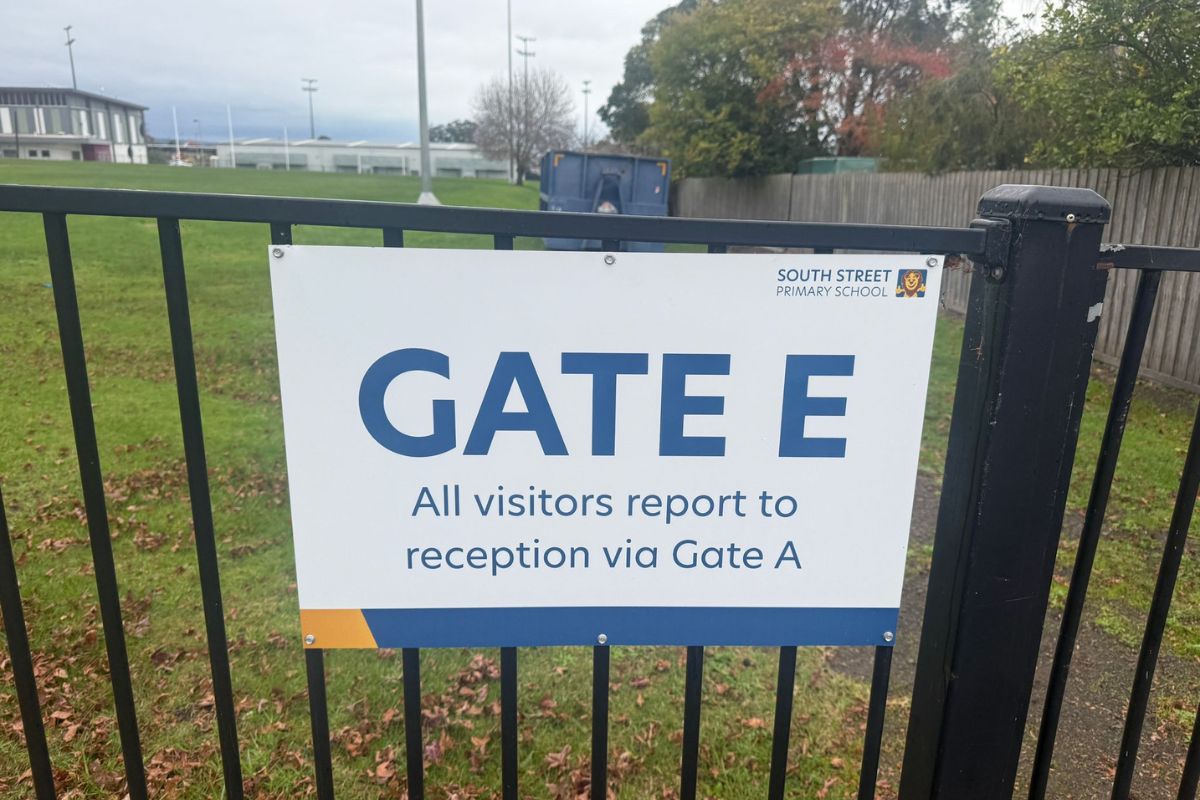
Gate signage matters too. Clearly labelling each gate can make a big difference for deliveries, contractors and emergency access, particularly on larger campuses with several entry points.
Rather than telling someone to “use the gate near the oval”, a clearly marked Gate 3 or Service Entrance gives them something specific to look for.
The same applies once they are inside the grounds. Block signs and directional signage can help emergency services and other visitors navigate the school without losing valuable time trying to work out where a particular building is located.
Choosing the right school traffic signage
Putting up more signs does not automatically make a school easier to navigate. The signage needs to be clear and appropriate for the environment. A few things are worth considering before installing or updating school traffic signs.
Visibility and readability
A sign is not doing much good if drivers cannot read it until they are already past it. Text should be large enough to read from the intended distance, with clear contrast and simple wording. Try to avoid squeezing too much information onto one sign. If a driver only has a few seconds to read it, the message needs to make sense at a glance.
Correct positioning
Where a sign sits can be just as important as what it says. Traffic signs should be positioned where people naturally need the information. Directional signs need to appear before a turn. Parking signs should be easy to see when entering the area. Speed and warning signs need enough clearance that drivers can respond safely. Trees, parked vehicles, fencing and other school infrastructure can also affect visibility, so it is worth assessing the site from a driver’s point of view.
Need assistance with positioning your signage? Chat to our team, or arrange a free site visit.
Durable outdoor materials
School traffic signage spends its life outside. Sun, rain, wind and general wear can quickly make low-quality signage look tired or difficult to read.
Choosing durable materials and finishes helps signs stay clear and presentable for longer, particularly in high-traffic areas. It also reduces the need to continually replace faded or damaged signs.
Consistent messaging and design
A coordinated signage system is easier to follow than a patchwork of signs added over many years. Using consistent colours, terminology, arrows and layouts helps people recognise information more quickly.
For example, if one sign says “Visitor Parking”, another says “Guest Car Park” and a third simply has a letter V, it creates unnecessary confusion.
Keeping the language and visual style consistent across the school makes the whole site easier to navigate, plus it quietly reinforces your school brand.
Regulatory and compliance considerations
Some traffic and parking signage may need to meet specific standards or local requirements, depending on where it is installed and what it communicates. Before replacing or introducing regulatory signage, it is worth checking the relevant requirements for your site.
For schools planning a larger signage update, working with an experienced signage provider can also help identify where different sign types may be required and how they should work together.
Need to update your school traffic signs?
School signage often evolves bit by bit. A new building goes in, another car park is added, a Kiss and Go zone changes location and suddenly there are five different sign styles pointing people in different directions.
If your school traffic signs are faded, outdated or no longer reflect how people move through the grounds, it may be time to review the site as a whole.
A coordinated signage plan can cover everything from parking and Kiss and Go zones to gate identification, pedestrian areas, building blocks and internal wayfinding.
School Signs works with schools to take care of the lot, from site inspection, design and production to installation of signage solutions that make school grounds easier to navigate and help keep everyone seen and safe.
Planning a signage update? Get in touch with the School Signs team to discuss your school site and what you need.


